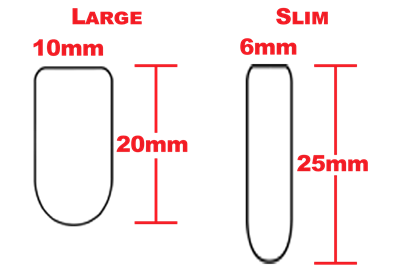
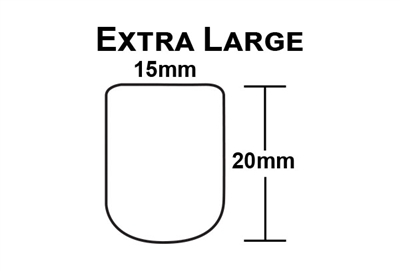
Note: This is a static rendering. In eCommerce, thumbnails would open in modal or preview area.
OsteoGen® Plugs
Price: (Log In to See Prices)
The One-Step Bone Graft Solution for Socket Preservation
Product Code: OP
- Description
- Video
- Clinical Protocol
- Suture Guide
OsteoGen® Plugs
The One-Step Bone Graft Solution for Socket Preservation
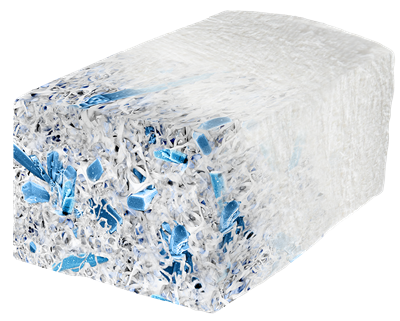
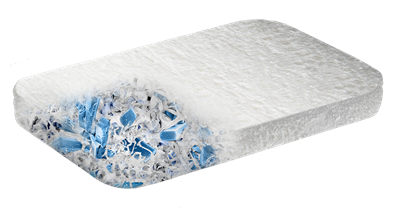
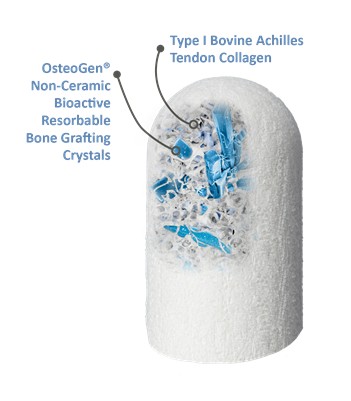
The Bovine Achilles Tendon collagen carries the bone graft for easy and efficient delivery to the site, eliminating the time spent mixing and packing particulate grafts while also eliminating the potential for graft washout. It can be used as an alternative to allografts and membranes.
- OsteoGen Bone Grafting Plugs have a 4-year shelf life and are available in multiple size configurations
- OsteoGen is a bioactive*, non-ceramic, resorbable calcium phosphate bone graft that is physicochemically & crystallographically* similar to human bone
- The Type I collagen acts as a wound dressing to stabilize the clot and to absorb and deliver blood flow to the slowly resorbing graft
- The collagen also provides a scaffold for keratinized tissue to develop over the grafted site
- Radiolucent on day of surgery – Radiopaque in 3-6 months
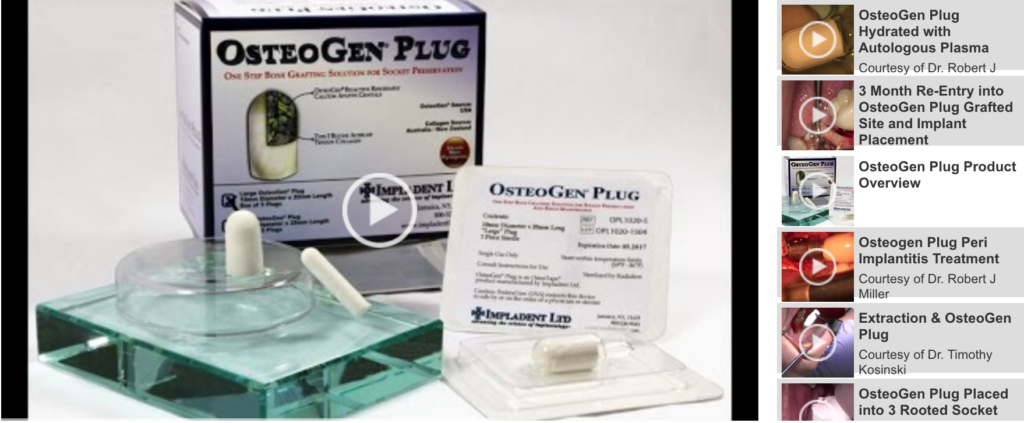
OsteoGen® Plug for Socket Preservation
Download the PDF OsteoGen® Plug Protocol Guide
One-step bone grafting solution for socket preservation without the need for a membrane.
- OsteoGen® is a resorbable bioactive bone graft composed of hydrophilic crystal and clusters.
- Ask patients if they are allergic to collagen.
- Advise patients to avoid alcohol, mouthwash, and chlorhexidine for two weeks after the procedure. These have been shown to be toxic to fibroblasts and may delay healing and crestal bridging of soft tissue.
- Use topical antibiotics (see Step 3).
- Do not hydrate the Plug prior to delivery.
- Administer anesthesia and extract the tooth using standard atraumatic flapless protocol.
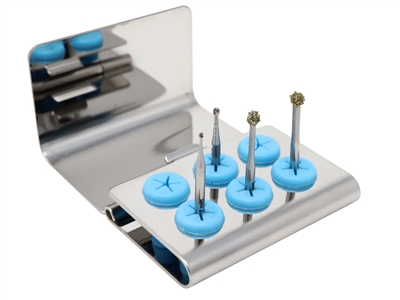
- Thoroughly remove the granulation tissue and the entire pathologic periodontal ligament using the Impladent Ltd Ultra Coarse Diamond Bur℠.
- Debride twice and flush the socket with normal saline.
- Using the #6 carbide bur included in the UCD kit, remove the lamina dura.
- Make lingual or palatal holes in the lower half of the socket where trabecular bone is available, to procure medullary blood containing osteoclast cells (220μm) and osteoblasts. This triggers the Regional Acceleratory Phenomenon (RAP).
- Profuse bleeding will be absorbed by the hydrophilic OsteoGen® Plug and will help prevent dry socket.
- Select an antibiotic with a pH close to physiologic normal. Aqueous Metronidazole is the preferred option (antibiotics with a low pH are not conducive to rapid bone formation).
- Following removal of the lamina dura, inject 2-3 drops mesiodistally at each side of the ridge crest, as well as into the socket, to kill bacteria and inhibit alveolar macrophage activity.
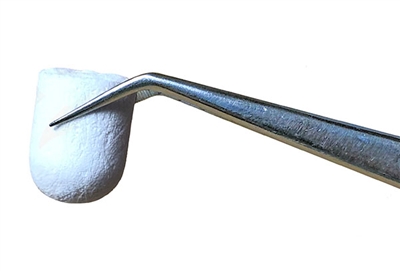
- Hold the OsteoGen® Plug with sterile tweezers, taper the Plug apically, and deliver it into the socket.
- Compact the plug aggressively. Initially, the Plug should be large enough to sit 3.0mm-5.0mm above the occlusal plane on average, so it can be compressed to fill the entire socket to the soft tissue superior level.
- Do not place the Plug to the crestal bone height.
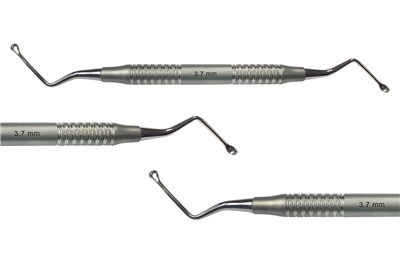
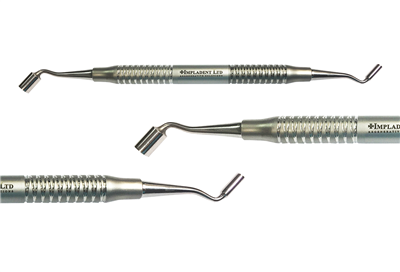
- Use a Plugger Instrument to align and compact the bone grafting crystals closer together. This creates a bioactive membrane barrier that controls migration of connective tissue.
- For multiple roots, use more than one Plug. Fill and unite the Plug roots superiorly at the root trunk, to the level of the soft tissue crest.
- Leave the top of the Plug intact so it can be compressed into the socket uniformly.
- Place sutures passively in a crisscross pattern over the Plug, not through the Plug. Do not use resorbable sutures.
- Soft tissue should bridge across the graft within 14 days.
- No toothbrushing or waterpik at the surgical site.
- Avoid alcohol, mouthwash, or chlorhexidine for two weeks to support rapid tissue healing at the crest.
- An immediate post-operative radiograph confirms correct Plug placement.
- The graft site is allowed to integrate for approximately 4 months prior to dental implant placement.
- Day of placement: Site will appear radiolucent on radiograph.
- 3-5 months (or longer): The Plug resorbs continuously and is replaced by host bone. Timing depends on the surgery and the patient’s age and metabolism.
- Radiopaque stage: Site becomes radiopaque and is ready for implant placement.
Supporting Clinical Evidence
- OsteoGen Plug® demonstrated a vertical height loss of 0.56mm versus 1.47mm control after extraction, and crestal width loss of 0.90mm versus 2.26mm control.
- Compared to other commercially available bone grafts for ridge preservation, OsteoGen Plug® showed 3-4 times more osteoblast proliferation with significantly better biocompatibility.
Insurance code for bone graft for ridge preservation following tooth extraction: D7953
Suture Guide Using the OsteoGen® Plugs
Case courtesy of Tim Kosinski, DDS, Download the PDF Suture Guide
- Following extraction, the large size OsteoGen® Plug is contoured to fill the three roots of the socket. Plug is delivered dry into a thoroughly debrided and actively bleeding socket.
- The OsteoGen® Plug is condensed firmly into the socket. Enough material should be used and positioned above the crest, to the level of or slightly below the soft tissue.
- A 3-0 Vicryl suture with a 3/8 circle reverse cutting needle is used. The needle is placed on the crestal portion of the grafted area and perforates through the facial. This ensures that the graft is not engaged.
- The needle is then reversed from the crest to the palatal tissue, again laying on top of the graft.
- The interrupted suture is tied in a 2-2-1 motion. This ensures that the knot will not loosen.
- A second interrupted suture is placed in the same motion.
- The two cross-linked sutures hold the OsteoGen® Plug in place.
- A third suture should be placed to assure that the material cannot displace. Note the band of attached gingiva on the facial aspect of the graft.
- Immediate post-operative radiograph illustrates correct placement of the OsteoGen® Plug. The site will be allowed to integrate for approximately 4 months prior to dental implant placement. The site will show radiolucent on the day of placement and radiopaque as the graft is resorbed and replaced by bone.
Note: We recommend non-resorbable sutures; resorbable can be used if resorption time is at least 3 weeks.
OsteoGen® Plug FAQs
Do I need a membrane when using the OsteoGen® Plug?
No. The OsteoGen® Plug is designed for one-step socket preservation without a membrane. Proper compression technique creates a bioactive membrane barrier that controls soft tissue migration on its own.
Should the OsteoGen® Plug be hydrated before placement?
No. The Plug should be delivered dry into the socket. Its hydrophilic properties allow it to absorb blood from the socket after placement, which helps prevent dry socket.
What suture technique is recommended with the OsteoGen® Plug?
Sutures should be placed passively in a crisscross pattern over the Plug, not through it. A 3-0 Vicryl suture with a 3/8 circle reverse cutting needle is recommended, tied in a 2-2-1 motion.
Can resorbable sutures be used?
Non-resorbable sutures are recommended. Resorbable sutures can be used only if the resorption time is at least 3 weeks.
How long does the OsteoGen® Plug take to resorb?
The Plug resorbs continuously over approximately 3 to 5 months, or longer depending on the surgical site and the patient’s age and metabolism. It is gradually replaced by host bone.
How will the graft site appear on a radiograph over time?
The site appears radiolucent immediately after placement. As the Plug resorbs and is replaced by host bone, the site becomes radiopaque and ready for implant placement.
How soon after placement can a dental implant be placed?
Sites are generally allowed to integrate for approximately 4 months before implant placement, though this can vary by patient and case.
What post-operative instructions should patients follow?
Patients should avoid alcohol, mouthwash, and chlorhexidine for two weeks, and avoid toothbrushing or waterpik use directly at the surgical site, to support healing.
Why should patients avoid chlorhexidine and mouthwash after the procedure?
These products have been shown to be toxic to fibroblasts and may delay healing and crestal bridging of soft tissue.
What is the insurance code for this procedure?
Insurance code for bone graft for ridge preservation following tooth extraction: D7953
How does the OsteoGen® Plug compare to other bone grafting materials?
Clinical studies show the OsteoGen Plug® resulted in less vertical and crestal width loss compared to controls, and demonstrated 3 to 4 times more osteoblast proliferation with better biocompatibility than other commercially available grafts.
Special Offer
Buy 5 Boxes & Get 1 Box Free.
- Minimum order Box of 5, use code OGX808
- If ordering the 5+1 Special, please note which size OsteoGen Plug® you would like for free in the Order Notes area at checkout.
Customer Support
Toll Free: 1 (888) 212-4383